
Angel sharks
Atlantic angelshark
Squatina dumeril
A flattened bottom-dwelling shark shaped more like a ray, built to hide in sediment and ambush passing prey.
View recent sightings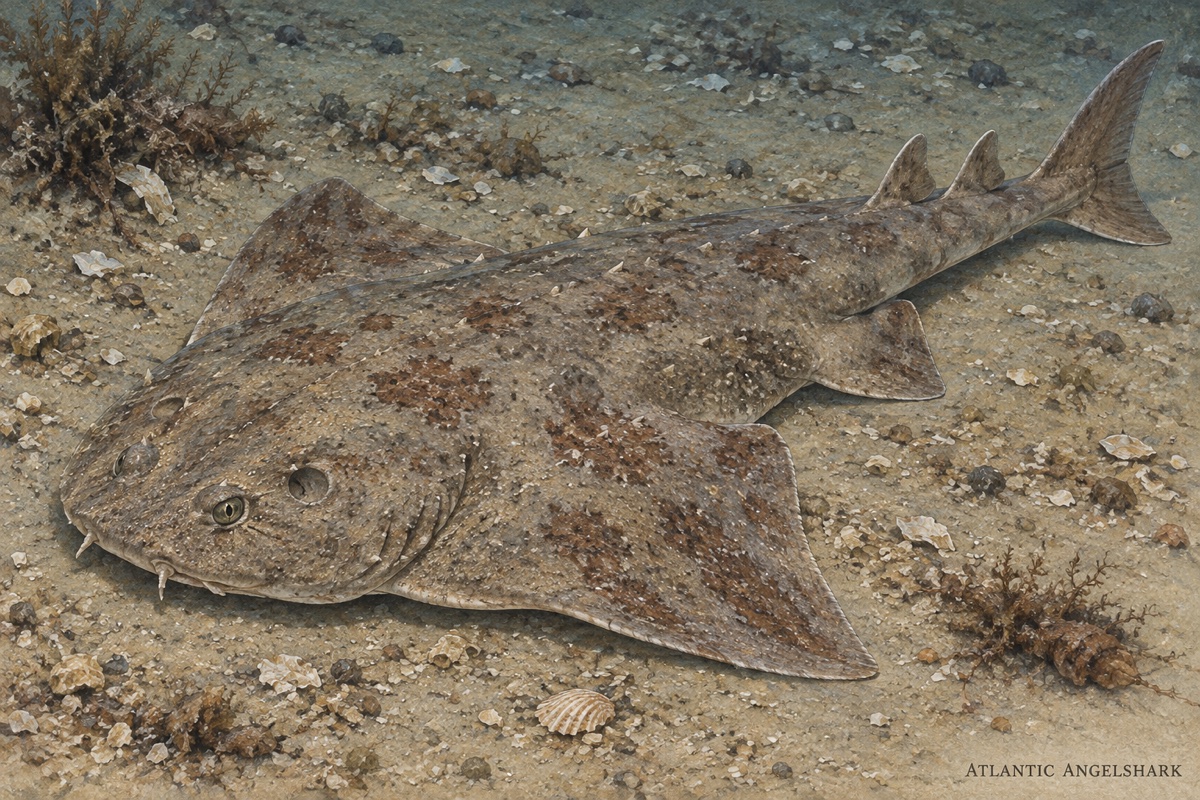
Every figure uses the same scale. The shark image is shown at the species’ published maximum length; individual animals vary.
Buried in sand or mud on the continental shelf and slope.
Atlantic coast of North America from Massachusetts through Florida and the Gulf of Mexico, plus parts of the Caribbean.
About 131–820 ft in the north; deeper in southern waters
Bottom-dwelling fish, mollusks, crustaceans, skates, and small rays.
Flattened body, broad wing-like pectoral fins, eyes and spiracles on top, and two small dorsal fins near the tail.
Live-bearing after eggs hatch inside the mother; litters commonly contain around 16 pups.
Species facts
Did you know?
It can disappear beneath sand or mud while waiting to ambush prey.
Angelsharks are true sharks even though their flattened bodies resemble rays.