
Whale sharks
Whale shark
Rhincodon typus
The largest living fish, recognizable by a broad head and a unique checkerboard pattern of pale spots and stripes.
View recent sightings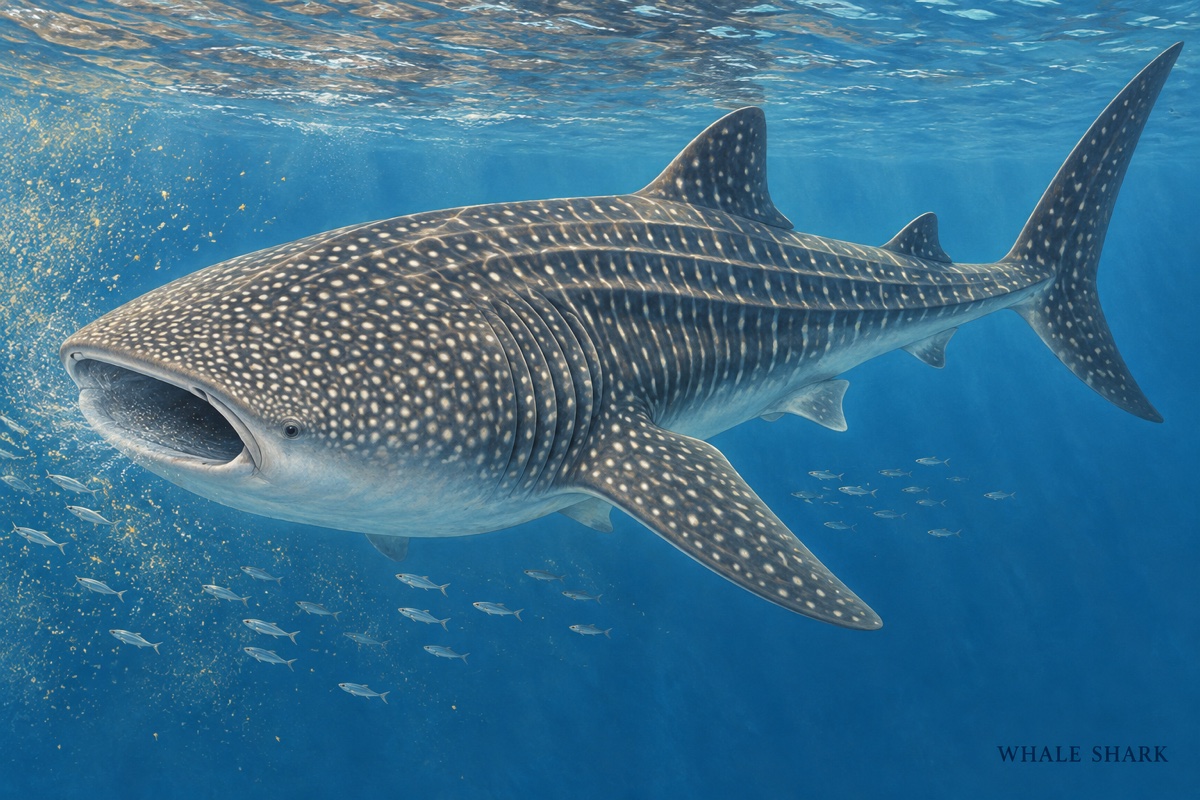
Every figure uses the same scale. The shark image is shown at the species’ published maximum length; individual animals vary.
Warm open-ocean and productive coastal waters, often near the surface while feeding but capable of deep dives.
Tropical and warm-temperate seas worldwide, including the Atlantic, Gulf of Mexico, and Pacific.
Surface waters to recorded dives beyond 6,000 ft
Plankton, fish eggs, small schooling fish, crustaceans, and squid filtered from the water.
Broad, flattened head; mouth near the tip of the snout; three body ridges; pale spots and bars.
Females retain egg cases internally and give birth to live young.
Species facts
Did you know?
Every whale shark has a spot pattern that can help researchers recognize individuals.
Despite its size, it feeds mainly by filtering small organisms from seawater.